
Miami-Dade · Broward · Palm Beach · Mon–Sat 8 AM–6 PM
Smoke and carbon monoxide detectors installed in Miami: $89 service call, $0 when the work is done that visit
Answer a few questions about your home and the detectors you have now. You get a call back within 2 hours, Mon–Sat 8 AM–6 PM, and a same-day visit when you ask before noon and a slot is open.
Detector service callMiami, FL
- Service call, Mon–Fri$89
- Service call, Saturday$129
- When the work is done that visit$0
Smoke and CO detectors
Smoke and carbon monoxide detector installation in Miami, FL
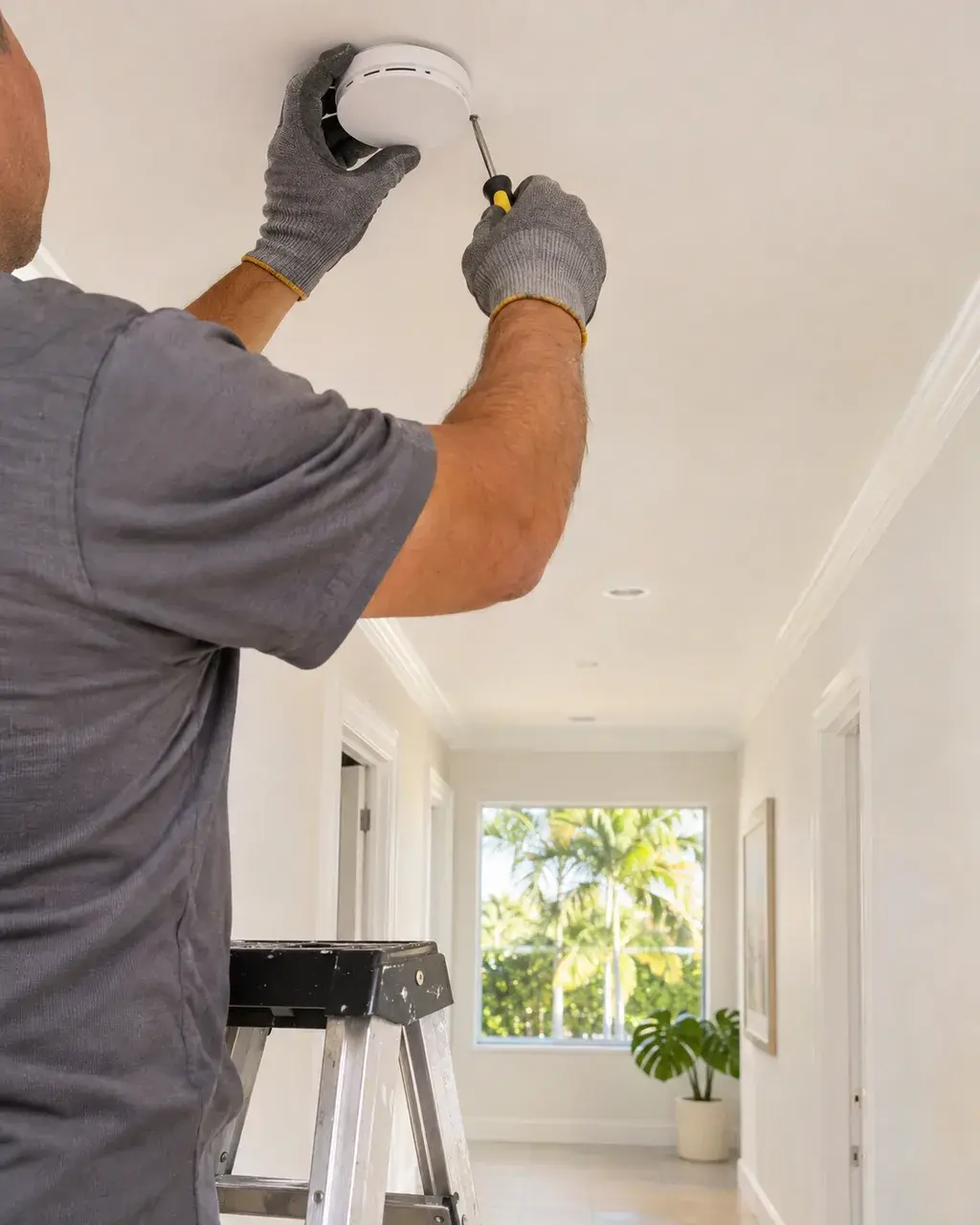
Smoke and carbon monoxide detector installation in Miami starts with a request. HVACServicesFlorida.com takes it and calls you back, then one licensed and insured contractor sends a technician for professional carbon monoxide detector installation in Miami. The technician checks the detectors you have, replaces old ones, adds missing ones and writes the price down before any work begins.
If a detector is sounding right now, do not wait for an appointment. Get everyone outside, call 911 and stay out until the fire department says the home is clear. HVACServicesFlorida.com is not an emergency service.
The technician handles the detectors in a home or a rental unit:
- New detectors. Smoke, carbon monoxide or combination models for each bedroom area, hallway and level of the home, with extra detectors where a larger home needs them.
- Replacements. Detectors that chirp, fail the test button or have reached the replacement date printed on the label, and before you start selling a home.
- Hardwired detectors. Interconnected models tied into the home's electrical system, so when one alarm sounds, every alarm sounds.
- Battery and plug-in models. Mounted in the right spot, with a source of power that suits the room, and tested after the install.
- A test of every detector. The technician tests each detector in the home after the work.
Hours are Monday to Saturday, 8 AM to 6 PM, and you can send a request online at any time. A request sent after 6 PM or on Sunday gets a call the next working morning with a 2-hour visit window.
How it works
How HVAC service works, from request to repair
Send a request
A few taps: what's wrong, where, and when you need it. Or call during business hours.
We call within 2 business hours
We confirm the problem, the service call price and your arrival window. Requests sent after 6 PM or on Sunday get a call the next business morning.
The technician arrives in a 2-hour window
The same day for morning requests with an open slot, otherwise the next business day. You get a text when the technician is on the way.
Price in writing, then the work
You see a photo of the problem and an itemized estimate before the repair starts. You pay after the work is done.
DETECTOR TYPES
Types of smoke and carbon monoxide detectors for a Miami home
There are five common setups. The right one depends on how the home is wired, how many bedrooms and levels it has and whether every alarm should sound together: no wiring near the spot points to battery or plug-in, one alarm for the whole house points to interconnected. Carbon monoxide detector installers pick the type with you and install it.
Battery-powered detectors
A battery model needs no electrical work, so it suits a quick replacement or a room with no nearby wiring.
Plug-in detectors
A plug-in detector runs on an outlet, often with a battery as backup for a power outage. It fits a hallway or a bedroom with an outlet close to the right spot.
Hardwired, interconnected detectors
These connect to the home's 120-volt wiring and to each other, so one alarm sets off all of them. Wiring them is electrical work for an electrician, and an older home may need new cable first, see house rewiring.
Combination smoke and CO detectors
One device does both jobs, which means fewer units on the ceiling and fewer batteries to track.
Smart detectors
If you choose a smart model, it sends an alert to your phone, which helps when nobody is home.
Where each detector goes matters as much as the type. The Consumer Product Safety Commission advises carbon monoxide alarms on every level of the home and outside sleeping areas, and interconnected alarms all sound at once. Each maker prints placement rules, and the technician follows them. Hardwired work is done by the electrical side of the same contractor, see electrician.
HVAC service terms you can check before you call
Our terms
2 hours
A call back within two hours, Mon–Sat 8 AM–6 PM
Same day
A visit the same day for requests before noon, when a slot is open
2 years
Written labor warranty on repairs and installations
$0 upfront
Repairs are paid after the work is done
FLORIDA RULES
Carbon monoxide detector installation requirements in Florida homes
Florida requires carbon monoxide alarms in new buildings and additions started on or after July 1, 2008, when the building has a fuel-burning appliance, a fireplace or an attached garage. Existing homes that are only repaired or remodeled are not covered by that rule. Florida Statutes section 553.885 sets it, and the table shows how it and the landlord rule work in practice.
| Situation | What the statute says | What it means for you |
|---|---|---|
| New home or addition, started on or after July 1, 2008, with a fuel-burning appliance, fireplace or attached garage | A carbon monoxide alarm within 10 feet of each room used for sleeping (s. 553.885) | Hardwired, battery-powered or combination alarms all meet the rule |
| Existing home that is repaired or remodeled | The rule does not apply, unless the work is an addition (s. 553.885) | No requirement by that statute |
| Landlord of a single-family home or duplex | Working smoke detection devices at the start of the tenancy, unless the lease says otherwise in writing (s. 83.51(2)(b)) | Smoke detectors are the landlord's job at move-in, and the lease can shift it |
| Rental condo or apartment | The landlord section for these units does not list smoke detectors, and carbon monoxide is not in section 83.51 at all | Check your lease and your HOA or building rules |
Check your lease and your city's building department for local rules. A gas stove, a fireplace or a garage that opens into the house are good reasons to add a detector even where the statute does not require one.
Service area
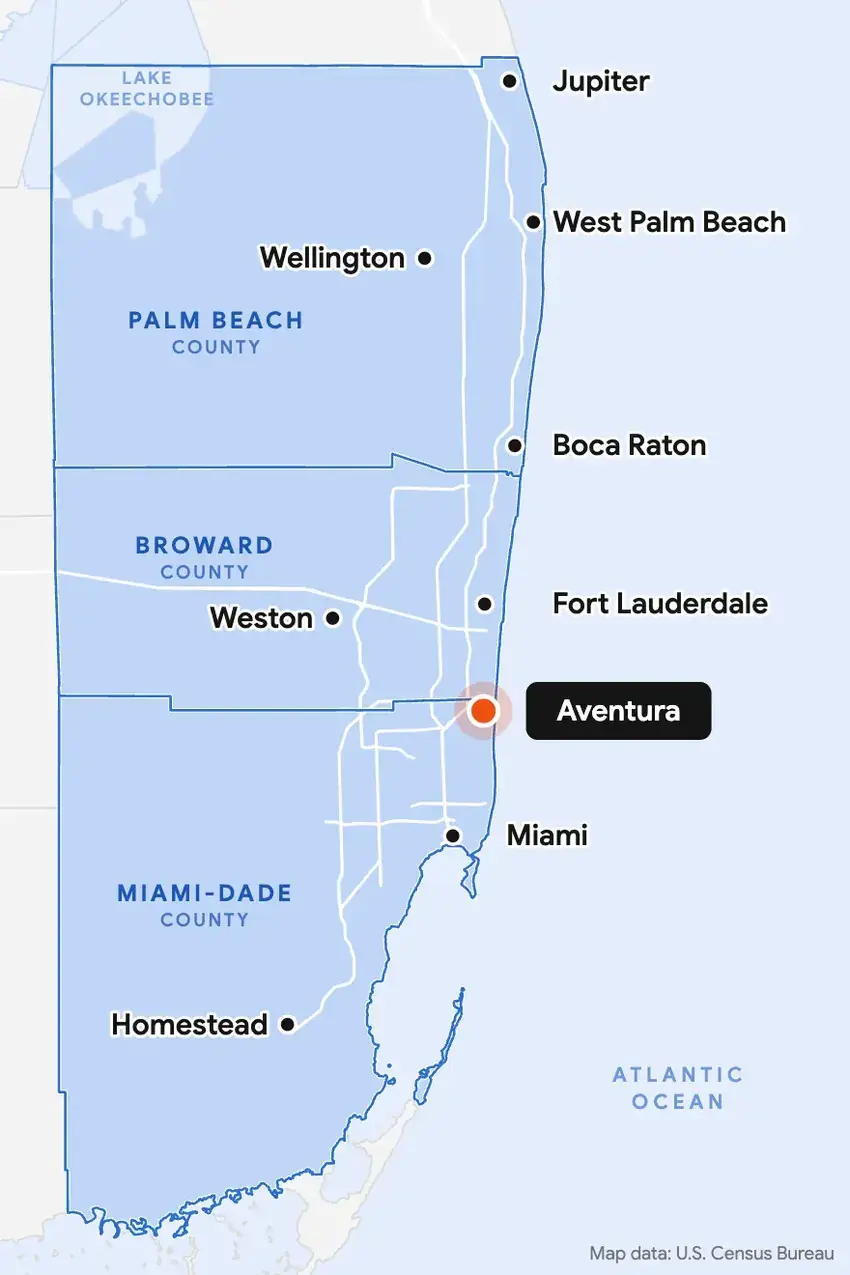
HVAC service across Miami-Dade, Broward and Palm Beach
Based in Aventura, between Miami and Fort Lauderdale.
Miami-Dade
Miami, Miami Beach, Aventura, North Miami, Coral Gables, Doral, Hialeah, Kendall, Key Biscayne, Miami Gardens, Miami Lakes, Pinecrest, Palmetto Bay, Cutler Bay, Homestead
Broward
Fort Lauderdale, Hollywood, Hallandale Beach, Pembroke Pines, Miramar, Davie, Plantation, Sunrise, Weston, Cooper City, Coral Springs, Coconut Creek, Tamarac, Pompano Beach, Deerfield Beach
Palm Beach
Boca Raton, Delray Beach, Boynton Beach, Lake Worth, West Palm Beach, Wellington, Royal Palm Beach, Palm Beach Gardens, Jupiter
- +1 (305) 686-8458call or WhatsApp
- 3285 NE 184th St, Aventura, FL 33160
- Mon–Sat 8:00 AM–6:00 PM
Maintenance plan
One HVAC maintenance plan for AC, plumbing and electrical: $199 a year
Or $18 a month. One plan for the three systems that keep a Florida home running.
Join the planOne plan · three systems
$199a year
or $18 a month
- Two AC tune-ups a year, in spring and fall
- Drain line flush
- Plumbing check: water heater, leaks, faucets
- Electrical check: panel, GFCI outlets, detectors
- $0service call
- 10%off repairs
- Priorityscheduling
- $1,000Dues you've paid count toward a new system, up to $1,000
FAQ
Questions Miami homeowners ask about smoke and carbon monoxide detector installation
How much does carbon monoxide detector installation cost in Miami?
There are no per-detector prices to publish, because the cost depends on how many detectors and which type. Detectors and labor go on a written estimate, line by line, that you approve first. The service call is $89 Monday to Friday and $129 on Saturday, and $0 when the work is done on that same visit. You pay after the work is done.
Do I need an electrician to install a carbon monoxide detector?
A battery-powered detector does not need one, because it mounts like a smoke alarm. A hardwired detector connects to the home's 120-volt wiring and to the other alarms, and that is electrical work for an electrician.
Do smoke detectors have to be hardwired in Florida?
For carbon monoxide, the statute accepts hardwired, battery-powered and combination alarms. Section 553.885 covers carbon monoxide alarms, not smoke detectors. For smoke detector wiring and whether a swap needs a permit, your city's building department can confirm what applies to your address.
What is the right location for a carbon monoxide detector?
On every level of the home and outside each sleeping area, such as the hallway by the bedrooms, following the maker's instructions. Interconnected detectors sound together.
What should I do when my carbon monoxide detector goes off?
Get everyone outside to fresh air, call 911 and re-enter safely only after the fire department says it is clear. Do not look for the source yourself. Afterward, have fuel-burning appliances given an inspection by a qualified technician. If you smell gas, call 911 and your gas company, and see gas line repair.
How often should detectors be replaced, and why do they chirp?
Replacement is often about 10 years as a rule of thumb, and the date on the label wins. A repeating chirp usually means a low battery or the end of the detector's life. Frequent false alarms can come from dust, steam or a dying battery.
Are landlords required to provide smoke detectors in Florida?
For a single-family home or duplex, the landlord must install working smoke detection devices at the start of the tenancy, unless the lease says otherwise in writing. Section 83.51 does not mention carbon monoxide.
Who installs the detectors, and who do I pay?
HVACServicesFlorida.com takes your request and calls you first. One licensed and insured contractor does the work, and labor carries a 2-year written warranty. You sign the agreement with the contractor. You pay the contractor directly, after the work is done.
Didn't find your answer?
Ask it on the call. It comes within two hours during business hours.

Request service
Get your Miami HVAC problem looked at for an $89 service call
Send a request now and expect a call within two hours, Monday to Saturday. The service call is $0 when the repair is done on the same visit.
2. What data. Your name, phone number, the answers you leave in the forms on hvacservicesflorida.com and, for rentals, the tenant's contact details you give us.
3. Why. To call you back, confirm the problem and the service call price, schedule the visit and pass your request to the licensed and insured partner contractor who does the work. We don't send marketing messages without your separate consent.
4. How we store it. Requests come to us by email and through the request system of the Tilda website builder. Only the people who handle requests have access. We keep the data for as long as it is needed to answer you and for the work, and delete it on request.
5. Who we share it with. The partner contractor who does the work, and the services without which the request can't reach us: the website builder and email. We don't sell or publish your data.
6. Your rights. You can ask what data we hold, correct it or have it deleted: write to info@hvacservicesflorida.com or call +1 (305) 686-8458. To stop text messages, reply STOP.
7. Consent. By sending a request, you agree to the processing of your data on these terms. The full policy is at /privacy-policy.
Date: November 18, 2026.